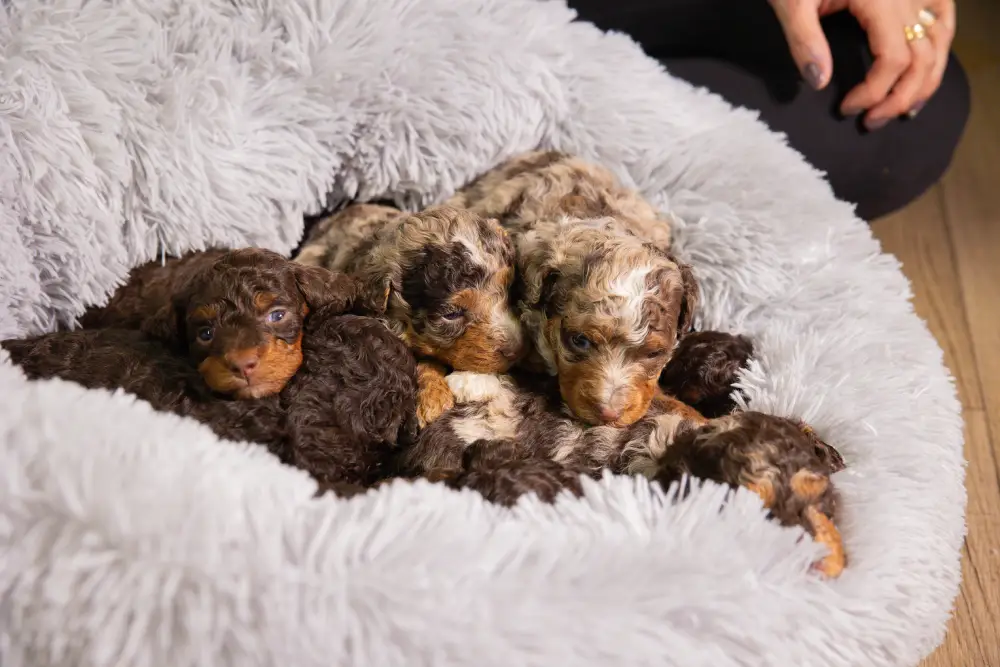
Mini Bernedoodles, the adorable cross between a Bernese Mountain Dog and a Miniature
Poodle, are quickly becoming a popular choice for dog lovers. Known for their smaller size,
playful nature, and lovable personalities, Mini Bernedoodles are the perfect companion for
families, singles, and retirees alike. However, like any dog breed, adopting a Mini Bernedoodle
comes with its own unique set of expectations and responsibilities.
In this guide, we’ll cover everything you need to know about adopting a Mini Bernedoodle,
including their temperament, care needs, and what to prepare for when welcoming one into your
home.
Temperament and Personality
Mini Bernedoodles are renowned for their delightful personalities. They inherit traits from both
parent breeds, making them:
1. Affectionate and Loyal
- Mini Bernedoodles are deeply attached to their families and thrive on companionship.
They’re happiest when they’re with their loved ones, whether that means cuddling on the
couch or playing in the yard.
2. Playful and Energetic
- These dogs are energetic and playful, making them great for families with kids or active
individuals. Their love for playtime means they’ll keep you entertained for hours.
3. Intelligent and Trainable
- Thanks to their Poodle lineage, Mini Bernedoodles are highly intelligent and eager to
please. This makes them quick learners, perfect for first-time dog owners who are ready
to invest in training.
4. Friendly and Social
- Mini Bernedoodles are naturally friendly and enjoy meeting new people and pets. Proper
socialization from a young age will enhance this trait, ensuring they’re confident in
various settings.
Size and Appearance
One of the key reasons people are drawn to Mini Bernedoodles is their manageable size. On
average, Mini Bernedoodles:
- Height: Stand between 18-22 inches tall.
- Weight: Weigh between 25-50 pounds, depending on genetics and diet.
Their coats are typically wavy or curly, low-shedding, and hypoallergenic, making them a great
choice for allergy sufferers. Coat colors vary and may include:
- Tri-color (black, white, and rust)
- Bi-color (black and white)
- Merle
- Solid colors (less common)
Care Needs for Mini Bernedoodles
While Mini Bernedoodles are relatively low-maintenance compared to some breeds, they do
have specific care requirements. Here’s what you need to know:
1. Grooming
- Brushing: Brush their coat 3-4 times a week to prevent matting and keep it looking
shiny. - Trimming: Schedule professional grooming every 6-8 weeks to maintain their coat’s
length and health. - Ear Cleaning: Check and clean their ears regularly to prevent infections, especially if
they have floppy ears. - Dental Care: Brush their teeth 2-3 times a week to maintain oral health and prevent bad
breath.
2. Exercise
- Mini Bernedoodles are energetic and require 30-60 minutes of exercise daily. This can
include walks, playtime, or interactive games. - Mental stimulation is equally important. Puzzle toys and training sessions can keep their
minds sharp and prevent boredom.
3. Diet
- Feed your Mini Bernedoodle high-quality dog food tailored to their age, size, and activity
level. - Monitor portion sizes to prevent overeating, as Mini Bernedoodles can be prone to weight
gain. - Consult your vet for specific dietary recommendations and to determine if supplements,
like omega-3 fatty acids for coat health, are necessary.
4. Health Checkups
- Schedule regular vet visits to keep your Mini Bernedoodle healthy and up-to-date on
vaccinations. - Be aware of potential health issues, such as:
- o Hip dysplasia
o Patellar luxation
o Progressive Retinal Atrophy (PRA)
o Allergies
Preparing Your Home for a Mini Bernedoodle
Before bringing your new furry friend home, it’s important to create a safe and welcoming
environment. Here’s a checklist to get you started:
1. Puppy-Proof Your Home
- Remove or secure items that could be chewed on, such as electrical cords, shoes, or toxic
plants. - Use baby gates to block off areas you don’t want your Mini Bernedoodle accessing.
2. Set Up a Designated Space
- Create a comfortable space with a crate or dog bed where your Mini Bernedoodle can
relax and feel secure. - Place their food and water bowls in an easily accessible location.
3. Stock Up on Supplies
- Dog food and treats
- Collar, leash, and harness
- Chew toys and puzzle toys
- Grooming tools (brush, nail clippers, toothbrush)
- Crate or playpen
- Training pads (for puppies)
4. Establish a Routine
- Dogs thrive on routine. Set consistent times for feeding, potty breaks, and walks to help
your Mini Bernedoodle adjust quickly.
Training and Socialization
Mini Bernedoodles are intelligent and eager to learn, making training a rewarding experience.
Start with these basics:
1. Potty Training
- Take your puppy outside frequently, especially after meals and naps.
- Use positive reinforcement, such as treats and praise, to reward successful potty breaks.
2. Obedience Training
- Teach basic commands like “sit,” “stay,” and “heel.”
- Keep training sessions short and fun to hold their attention.
3. Socialization
- Expose your Mini Bernedoodle to various people, pets, and environments early on.
- Arrange playdates with other dogs and take them to pet-friendly parks or cafes.
- Reward positive interactions to build their confidence.
What to Expect in the First Few Weeks
Adopting a Mini Bernedoodle is an exciting time, but the transition can be overwhelming for
both you and your new pet. Here’s what to anticipate:
1. Adjustment Period
- Your Mini Bernedoodle may be shy or nervous as they adapt to their new surroundings.
Be patient and provide plenty of reassurance.
2. House Training
- Expect accidents as your puppy learns the rules. Consistency and positive reinforcement
are key to successful house training.
3. Bonding Time
- Spend quality time with your new dog to build trust and strengthen your bond. This
includes playtime, cuddles, and training sessions.
4. Vet Visit
- Schedule a check-up with your vet within the first week to ensure your Mini Bernedoodle
is healthy and discuss a vaccination and wellness plan.
Final Thoughts
Adopting a Mini Bernedoodle is a joyful experience that comes with plenty of rewards. Their
loving temperament, playful energy, and manageable size make them an excellent choice for
many families and individuals. By understanding their needs and preparing your home, you can
ensure a smooth transition and provide your Mini Bernedoodle with a happy, healthy life.
With the right care, training, and affection, your Mini Bernedoodle will quickly become a
cherished member of your family.