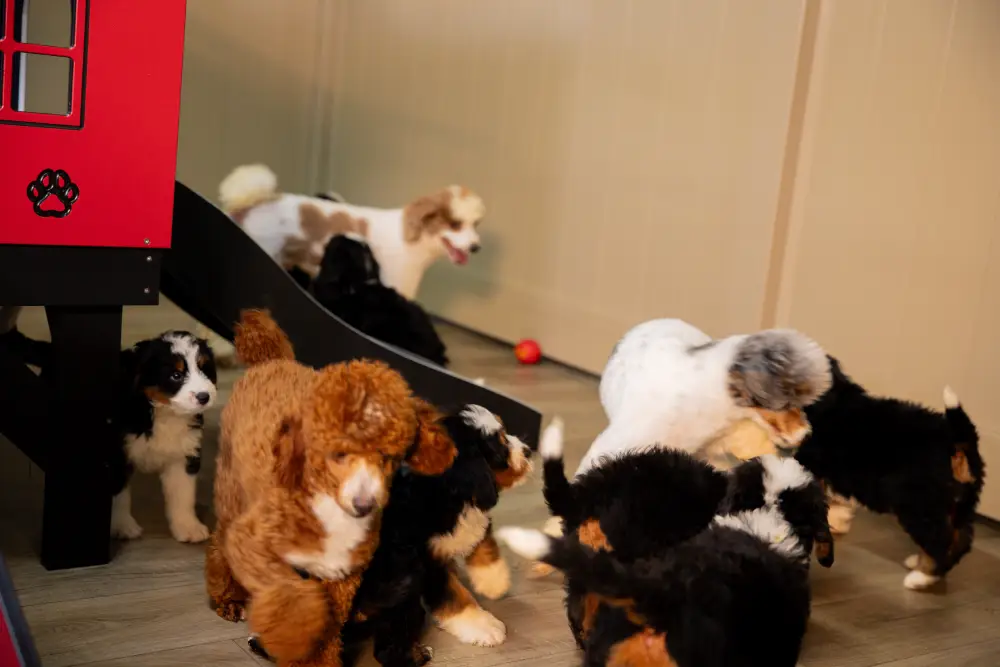
Bernedoodles, the adorable hybrid of Bernese Mountain Dogs and Poodles, are beloved for their
intelligence, affectionate nature, and stunning coats. One of the most exciting aspects of owning
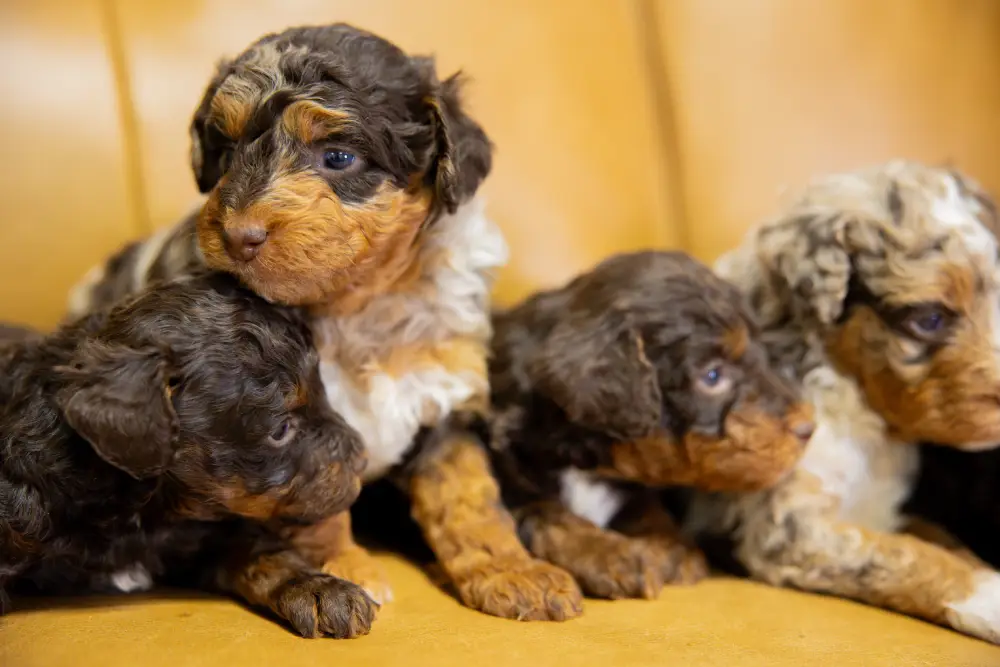
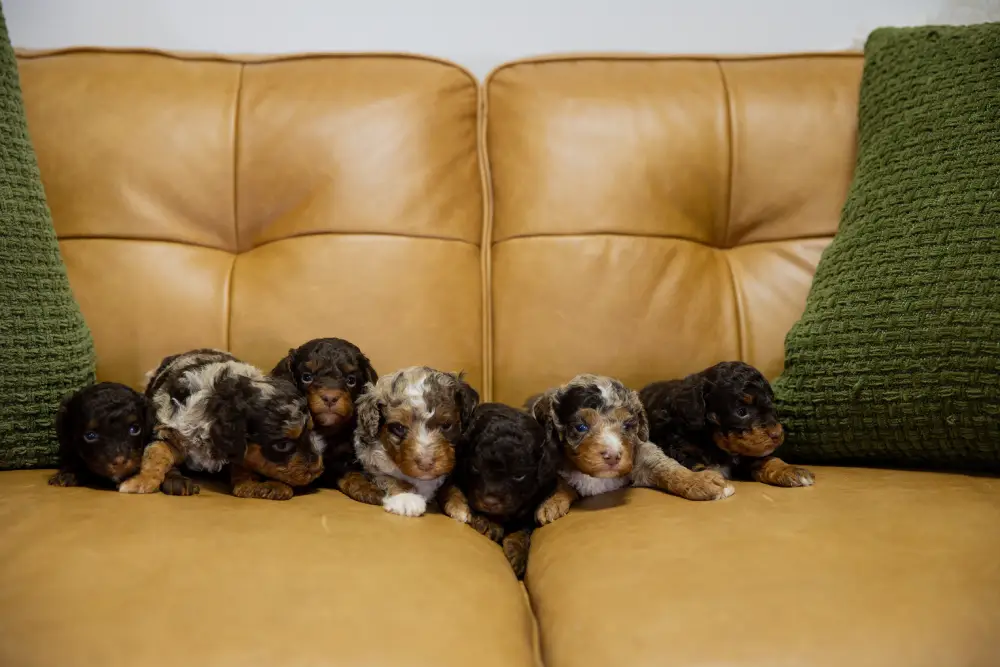
a Bernedoodle is the sheer variety of coat colors they can come in. From classic tri-colors to
striking merle patterns, Bernedoodle colors offer a wide spectrum of beauty. In this guide, we’ll
explore the fascinating world of Bernedoodle coat colors, the genetic factors behind them, and
what prospective owners should know when choosing their perfect pup.
The Range of Bernedoodle Colors
Bernedoodles boast a stunning array of coat colors. Let’s dive into some of the most common
and unique options:
1. Tri-Color
The tri-color coat is perhaps the most iconic for Bernedoodles, as it mirrors the traditional
coloring of the Bernese Mountain Dog. This pattern typically includes black, white, and rustcolored markings. The white is often found on the chest, face, and paws, while the rust addsaccents to the legs and eyebrows, creating an unmistakable and classic appearance.
2. Bi-Color
Bi-color Bernedoodles feature two prominent colors, often black and white or brown and white.
While they lack the third rust color seen in tri-colored Bernedoodles, they can still have striking
and beautiful markings. The simplicity of the bi-color coat often appeals to owners looking for a
more understated yet elegant look.
3. Merle
Merle Bernedoodles are a show-stopper! This unique pattern features a marbled mix of colors,
often blue or gray combined with black, white, or tan. Merle coats are the result of a specific
gene and create a one-of-a-kind look that makes these dogs stand out in any crowd. However, it’s
important to note that merle patterns can sometimes be associated with certain genetic health
risks, which we’ll discuss later.
4. Phantom
Phantom Bernedoodles have a solid base coat color (often black or dark brown) with lighter
markings on specific areas, such as the chest, legs, eyebrows, and under the tail. These markings
can resemble those of a Doberman Pinscher and add an air of sophistication to their appearance.
5. Sable
Sable Bernedoodles have a fascinating coat that can appear to shift in color over time. The sable
gene causes individual hairs to have a blend of light and dark colors, creating a gradient effect.
Puppies often start darker and may lighten as they mature, resulting in a dynamic and everchanging coat.
6. Solid Colors
Although less common, some Bernedoodles have solid-colored coats, such as black, white, or
brown. While they may lack the intricate patterns of other Bernedoodles, their single-color coats
have a sleek and classic appeal.
7. Parti
Parti-colored Bernedoodles have coats that are at least 50% white with patches of another color,
such as black, brown, or gray. This pattern creates a playful and unique look that’s sure to turn
heads.
How Coat Colors Are Determined
The wide variety of Bernedoodle coat colors is influenced by genetics. Understanding the
science behind these colors can help prospective owners appreciate the complexity and
uniqueness of their furry friends.
The Role of Parent Breeds
Since Bernedoodles are a cross between Bernese Mountain Dogs and Poodles, their coat colors
are influenced by the genetic traits of both parent breeds. Bernese Mountain Dogs typically have
a tri-color coat, while Poodles come in a wide range of colors and patterns. The combination of
these traits results in the diverse array of Bernedoodle colors.
Key Genetic Factors
- Base Coat Color: The base color of a Bernedoodle’s coat (e.g., black, brown, or white) is
determined by dominant and recessive genes inherited from the parents. - Pattern Genes: Patterns like tri-color, phantom, and merle are controlled by specific
genes that dictate the distribution of colors across the coat. - Dilution Genes: Dilution genes can affect the intensity of the coat color, turning a black
coat into gray or a brown coat into a lighter shade. - Merle Gene: The merle gene creates the marbled pattern seen in merle Bernedoodles. It’s
important to pair merle dogs responsibly to avoid health complications.
Generational Influence
Bernedoodles are categorized by generations (F1, F1b, F2, etc.), which can influence coat color
and predictability. For example:
- F1 Bernedoodles (first-generation) inherit 50% of their traits from each parent, resulting
in greater color variation. - F1b Bernedoodles (backcrossed with a Poodle) tend to have more Poodle-like traits,
including a wider range of colors and curlier coats.
Health Considerations for Coat Colors
While coat color is an exciting aspect of owning a Bernedoodle, it’s essential to consider the
health implications associated with certain colors and patterns:
Merle Coat Risks
Merle Bernedoodles are undeniably beautiful, but breeding two merle dogs together can result in
puppies with a double merle gene. This can lead to health issues such as:
- Deafness
- Vision problems
- Skin sensitivity
We take great care to avoid pairing two merle dogs to reduce the risk of these complications.
Dilution Gene Concerns
Dilution genes, which lighten coat colors, can sometimes be associated with skin or coat issues.
We, at Adora Perfect Pups, carefully select our breeding pairs to minimize such risks.
Choosing the Right Bernedoodle Color for You
When selecting a Bernedoodle, it’s important to prioritize health and temperament over coat
color. That said, finding a color and pattern that resonates with you is part of the joy of bringing
home a new furry friend. Here are some tips:
- Consider Maintenance: Some coat colors and patterns, like merle or sable, may require
more frequent grooming to maintain their appearance. - Work with Reputable Breeders like Adora Perfect Pups: We prioritize the health and
well-being of our puppies while providing transparency about coat color genetics and
potential risks. - Think Long-Term: Remember that some coat colors, like sable, may change over time.
Be open to the dynamic beauty of your Bernedoodle’s evolving appearance.
Conclusion
Bernedoodles are a delightful blend of beauty, brains, and personality. Their diverse range of
coat colors is just one of the many reasons they’ve captured the hearts of dog lovers everywhere.
Whether you’re drawn to the classic tri-color, the eye-catching merle, or the elegant phantom
pattern, each Bernedoodle is a unique masterpiece. With the right care and love, your
Bernedoodle will be a cherished companion, no matter what color they come in.
By understanding the variety and genetics behind Bernedoodle colors, you’re not only
appreciating their aesthetic beauty but also ensuring a happy and healthy future for your furry
friend. Happy Bernedoodle hunting!