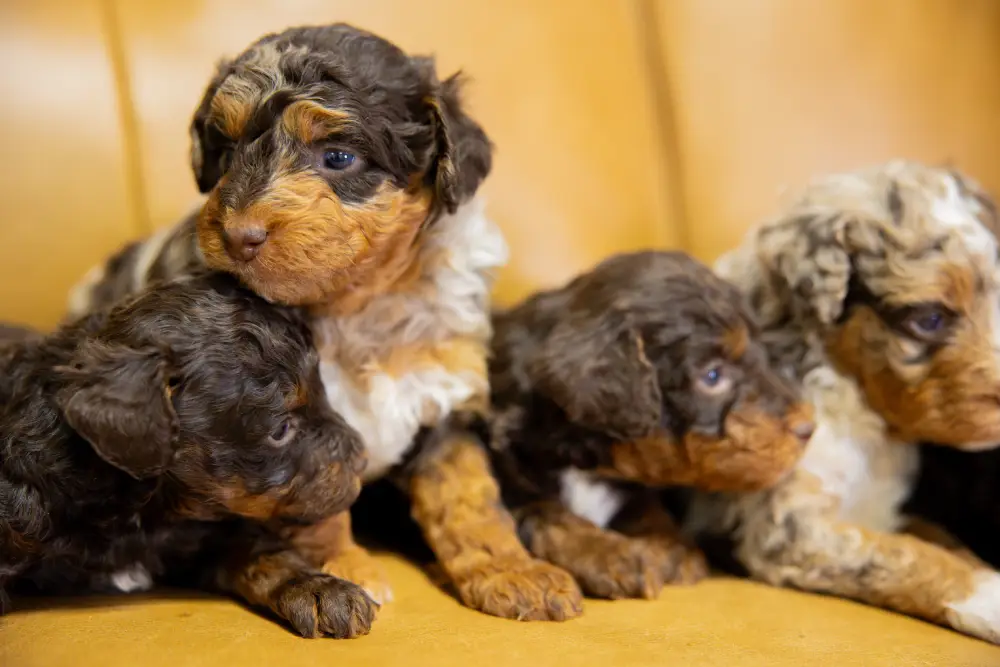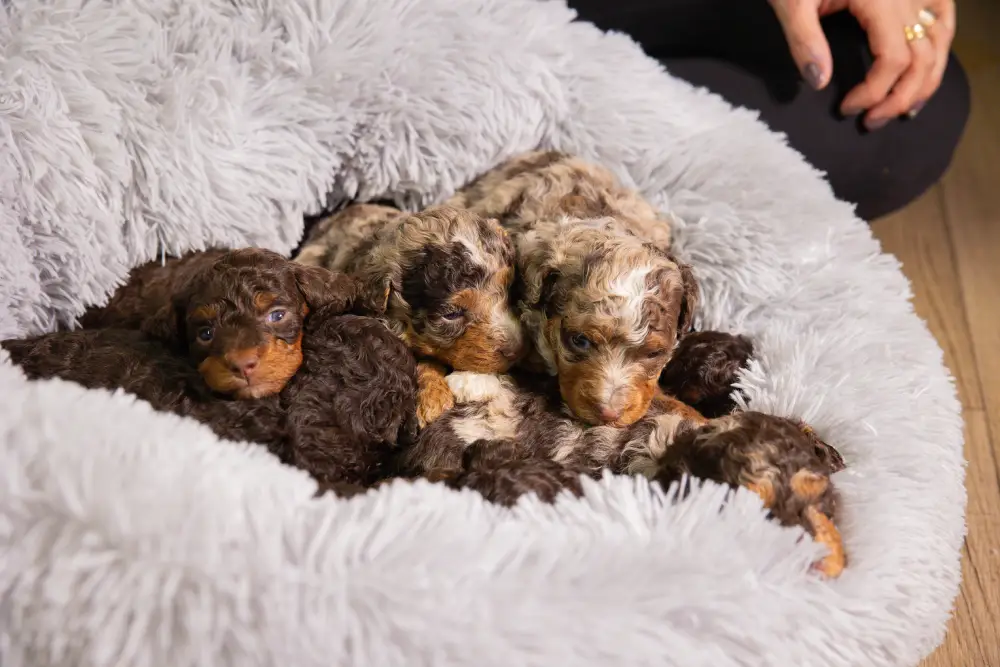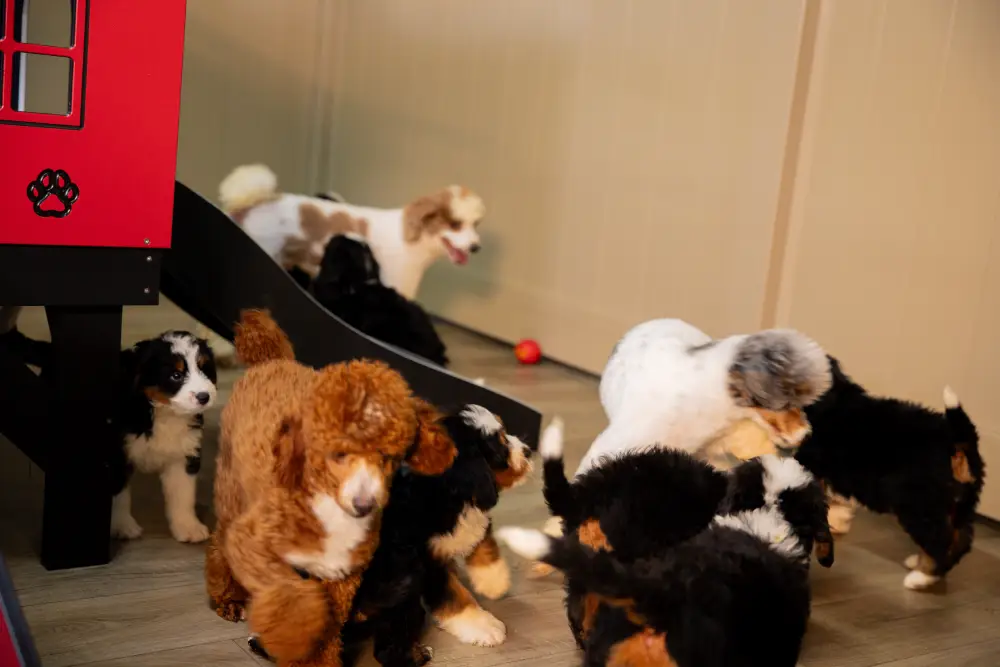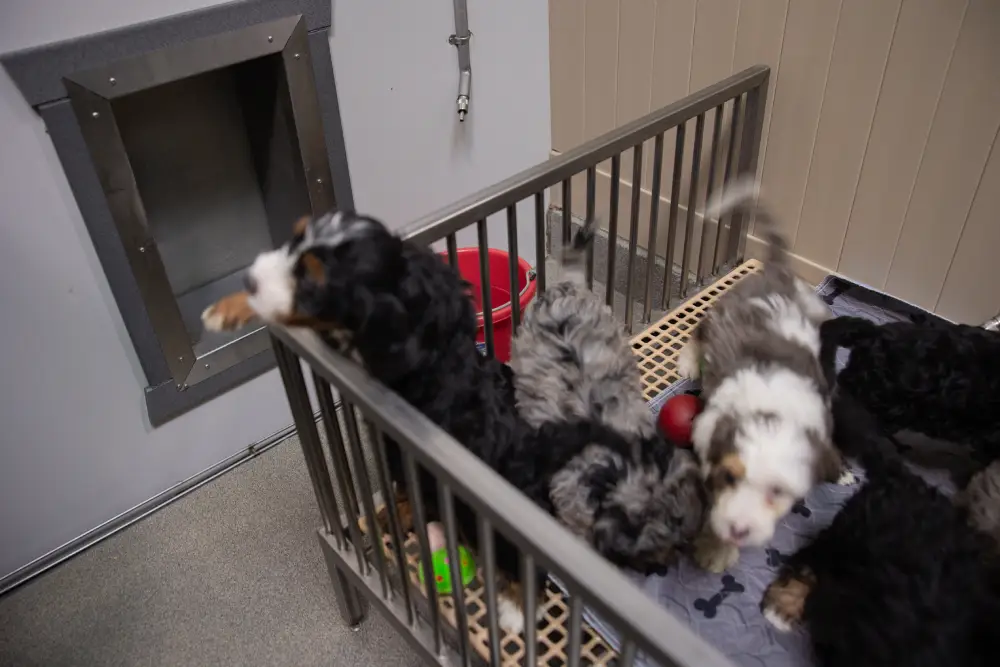
Bernedoodles, the lovable crossbreed of Bernese Mountain Dogs and Poodles, are known for
their intelligence, affection, and beautiful coats. While their thick, often wavy or curly coats
make them well-suited for cooler climates, they still require special care during both hot
summers and cold winters to stay comfortable and healthy.
This guide will help you understand how to adapt your Bernedoodle’s care routine to seasonal
changes, ensuring they thrive year-round.
Hot Summers: Keeping Your Bernedoodle Cool and Comfortable
Summertime can be challenging for Bernedoodles due to their thick coats and sensitivity to heat.
Here are essential tips to help them stay safe and cool during the warmer months:
1. Provide Plenty of Water
- Ensure your Bernedoodle has access to fresh, clean water at all times.
- Use a portable water bottle or bowl for hydration during walks or outings.
- Add ice cubes to their water bowl on hot days to keep it cool.
2. Avoid Peak Heat Hours
- Exercise your Bernedoodle early in the morning or late in the evening when temperatures
are cooler. - Limit outdoor activities during peak heat hours (10 a.m. to 4 p.m.).
- Be mindful of hot pavement, as it can burn your dog’s paw pads. Use the back-of-hand
test: if the pavement is too hot for your hand, it’s too hot for your dog.
3. Create a Cool Environment
- Provide a shaded area outdoors where your Bernedoodle can relax.
- Use fans or air conditioning indoors to keep your home cool.
- Consider a cooling mat or vest for additional comfort.
4. Grooming for Summer
- Regular brushing helps remove loose hair and prevent matting, which can trap heat.
- Avoid shaving your Bernedoodle’s coat, as it provides insulation and protects against
sunburn. - Trim the hair around their paws and ears to improve airflow.
5. Watch for Signs of Overheating
Be aware of heat exhaustion symptoms, including:
- Excessive panting or drooling
- Lethargy or weakness
- Rapid breathing
- Vomiting or diarrhea
If you notice these signs, move your Bernedoodle to a cool area, offer water, and contact your
vet immediately.
6. Incorporate Water Play
- Set up a kiddie pool or sprinkler in your yard for your Bernedoodle to enjoy.
- Visit dog-friendly lakes or beaches where your pup can swim and cool off.
- Always supervise water activities and ensure your dog wears a life jacket if swimming in
deep water.
Cold Winters: Keeping Your Bernedoodle Warm and Safe
While Bernedoodles tend to handle cold weather better than heat, they still need extra care
during winter to avoid discomfort and health risks. Follow these tips to keep them cozy and safe:
1. Protect Their Paws
- Use dog booties to protect your Bernedoodle’s paws from ice, snow, and salt.
- Apply a paw balm to prevent cracking and irritation.
- Check their paws after walks for ice buildup or debris.
2. Adjust Outdoor Time
- Limit time spent outdoors during extreme cold, especially for smaller or thinner-coated
Bernedoodles. - Provide opportunities for indoor play and mental stimulation to compensate for shorter
walks. - Ensure they have access to a warm, dry place to rest after being outside.
3. Dress for the Weather
- Consider a doggy sweater or jacket for extra warmth during walks.
- Choose waterproof gear to keep your Bernedoodle dry in snowy or wet conditions.
- Make sure the clothing fits well and doesn’t restrict movement.
4. Grooming for Winter
- Regular brushing helps maintain their coat’s insulating properties by preventing matting.
- Avoid over-bathing, as it can strip natural oils and dry out their skin.
- Keep their fur trimmed around the paws to reduce ice and snow accumulation.
5. Provide Indoor Comfort
- Offer a cozy bed or blanket in a warm area of your home.
- Avoid placing their bed near drafty windows or doors.
- Use a heated pet bed or blanket for added warmth if your Bernedoodle seems chilly.
6. Watch for Signs of Cold Stress
Be alert for symptoms of cold stress, such as:
- Shivering or trembling
- Whining or seeking shelter
- Lifting paws off the ground
- Slow movements or lethargy
If you notice these signs, bring your Bernedoodle inside immediately to warm up.
General Seasonal Care Tips
1. Stay Consistent with Vet Visits
- Schedule regular check-ups to monitor your Bernedoodle’s health year-round.
- Discuss any seasonal concerns, such as allergies or skin issues, with your vet.
2. Monitor Their Weight
- Adjust their diet and exercise routine to prevent weight gain during the winter or loss
during the summer. - Keep an eye on portion sizes and provide nutritious, balanced meals.
3. Provide Mental Stimulation
- Use puzzle toys, treat-dispensing games, or training sessions to keep your Bernedoodle
mentally engaged. - Rotate toys to maintain their interest.
4. Stay Hydrated
- Ensure your Bernedoodle has access to water year-round, as hydration is essential in both
hot and cold weather. - Prevent water bowls from freezing during the winter by using heated water bowls or
keeping them indoors.
5. Be Aware of Allergies
- Monitor your Bernedoodle for signs of seasonal allergies, such as itching, sneezing, or
red, irritated skin. - Work with your vet to manage allergies effectively, which may include antihistamines or
special shampoos.
Final Thoughts
Seasonal care for your Bernedoodle is essential to keep them comfortable, healthy, and happy
throughout the year. By taking proactive steps to address the challenges of both hot summers and
cold winters, you’ll ensure your Bernedoodle thrives no matter the season.
Remember, every Bernedoodle is unique, and their needs may vary depending on their coat type,
size, and individual tolerance to weather conditions. With a little preparation and attentiveness,
your Bernedoodle will enjoy every season by your side.